
Cracks are the most common form of asphalt damage. They show up on driveways, parking lots, and roads everywhere, and they almost always start small. The problem is that small cracks rarely stay small. Left untreated, they widen, deepen, and let water reach the base layer where damage becomes far more expensive to fix.
The two main solutions are crack filling and crack sealing. They sound similar, and many property owners use the terms interchangeably, but they are not the same thing. Each method has a specific purpose, a different material, and a different cost. Understanding the difference between crack filling and crack sealing is the first step toward making the right choice for your driveway or parking lot.
This guide breaks down both methods in detail and helps you decide which one fits your property, your budget, and the kind of cracks you are dealing with.
Why Cracks Matter More Than They Look
Before getting into the comparison, it helps to understand why crack repair is so important in the first place. A crack is more than a cosmetic issue. It is an open door that lets water, dirt, and debris reach the layers underneath your asphalt.
Once water gets in, the freeze and thaw cycles common in West Tennessee winters expand and contract the cracks further. Over time, this leads to potholes, sunken sections, and base layer damage. What started as a $50 repair can quickly turn into a $5,000 replacement.
This is why preventative asphalt maintenance is the smartest investment any property owner can make. Treating cracks early stops the damage before it spreads.
Got cracks across your driveway?
Call Quality Paving West TN for a free inspection.
What Is Asphalt Crack Filling?
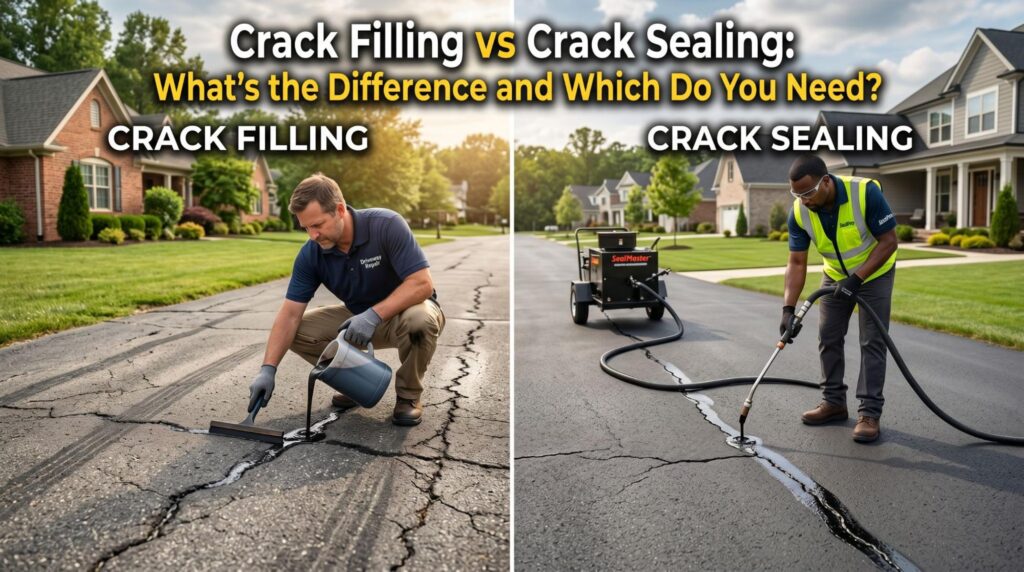
Asphalt crack filling is the process of filling in non working cracks with a liquid asphalt emulsion or cold pour material. Non working cracks are cracks that do not move significantly with temperature changes. They are usually small, narrow, and shallow.
The goal of crack filling is to prevent water and debris from getting into the crack while restoring a smooth surface. The material used for crack filling is typically less flexible than what is used for sealing, which makes it well suited for stable cracks that are not likely to expand or contract.
Common Crack Filling Materials
- Cold pour crack filler for small surface cracks that do not require heating
- Liquid asphalt emulsions for general filling
- Rubberized fillers that offer slightly more flexibility than basic asphalt
- DIY products available in tubes or buckets for small repairs
For most homeowners dealing with small surface cracks, cold pour crack filler is the easiest and most affordable choice. It comes ready to apply, requires no special equipment, and works well for hairline and minor cracks.
What Is Asphalt Crack Sealing?
Asphalt crack sealing is a more advanced repair method that uses a hot applied, rubberized sealant designed to flex with temperature changes. It is used for working cracks, which are cracks that open and close as the asphalt expands and contracts throughout the year.
The sealant is heated to a high temperature, applied directly into the crack, and bonds tightly with the surrounding asphalt as it cools. The result is a flexible, waterproof barrier that handles movement without breaking down.
Hot Rubberized Crack Filler
The most common material used in crack sealing is hot rubberized crack filler. This material is heated to around 380°F before application, which allows it to flow deep into the crack and form a strong bond. Once cooled, it remains flexible enough to handle the natural movement of asphalt without cracking again.
Hot rubberized sealants typically last 5 to 8 years, making them the longer term solution compared to cold pour fillers.
The Key Differences Between Crack Filling and Crack Sealing
Now that both methods are clear, the comparison becomes easy. Here is a side by side look at what sets them apart.
Material
- Crack filling uses cold pour or liquid asphalt materials
- Crack sealing uses hot applied rubberized sealants
Application
- Crack filling is simpler and can sometimes be a DIY project
- Crack sealing requires specialized heating equipment and is best done by professionals
Flexibility
- Crack filling is less flexible and works best on stable, non working cracks
- Crack sealing remains flexible and handles working cracks that move with temperature changes
Lifespan
- Crack filling typically lasts 1 to 3 years
- Crack sealing typically lasts 5 to 8 years
Cost
- Crack filling is the more affordable upfront option
- Crack sealing costs more but offers better long term value
Use Case
- Crack filling is best for hairline and minor surface cracks
- Crack sealing is best for larger, deeper, or active cracks
Not sure which one your driveway needs? Quality Paving West TN gives honest, on site advice.
When to Use Crack Filling
Knowing when to use crack filling is mostly about looking at the size, depth, and behavior of the crack. Crack filling works best for cracks that are not moving much and are mainly cosmetic or low risk.
Crack filling is the right choice when:
- Cracks are hairline or under a quarter inch wide
- Cracks are surface level and not deep
- The driveway or parking lot is otherwise in good shape
- The goal is to prevent water entry on stable cracks
- You want an affordable, fast repair option
This makes it ideal for many residential crack repair projects where small cracks appear after winter and need quick attention before sealcoating.
When to Use Crack Sealing
When to use crack sealing comes down to whether the cracks are likely to keep moving. Larger, active cracks need a flexible material that can stretch and compress without losing its bond.
Crack sealing is the right choice when:
- Cracks are wider than a quarter inch
- Cracks are deep and reach toward the base layer
- The asphalt is exposed to heavy temperature changes
- You want the longest lasting repair available
- The surface sees consistent traffic or vehicle weight
For commercial properties, parking lot crack repair almost always uses crack sealing. Larger surfaces handle more movement, and the longer lifespan of hot sealant pays off across hundreds or thousands of feet of asphalt.
Driveway Crack Repair in West Tennessee
For homeowners across the region, driveway crack repair in West Tennessee typically involves a mix of both methods. Most driveways have a few small cracks and one or two larger ones, and a professional contractor will use the right material for each situation.
The process usually looks like this:
- Clean out cracks to remove dirt and debris
- Inspect cracks to determine type and depth
- Use cold pour or filling material for hairline cracks
- Use hot rubberized sealant for wider, deeper, or active cracks
- Allow the repair to cure before normal use
- Schedule sealcoating after cracks are sealed if needed
A professional contractor will assess your driveway as a whole and recommend the most cost effective combination of methods.
Asphalt Crack Repair in Jackson TN
For property owners in larger cities, asphalt crack repair in Jackson TN follows the same general process but often involves larger surfaces and a wider variety of crack types. Both residential and commercial properties benefit from regular crack treatment, especially before sealcoating cycles.
The biggest advantage of working with a local contractor is faster response, area specific knowledge of soil and climate factors, and easier follow up service. A crack repair done correctly the first time can prevent thousands in future repairs.
How Much Does Crack Repair Cost?
The cost of crack filling in West Tennessee typically ranges from $1 to $3 per linear foot for cold pour repairs, while hot rubberized crack sealing usually runs $2 to $4 per linear foot. The total cost depends on:
- Total length of cracks
- Crack width and depth
- Accessibility of the surface
- Whether cleaning and prep work is needed
- Material and labor costs
For most homeowners, a typical crack repair project falls between $150 and $600, depending on the scope. Compared to the cost of resurfacing or replacing a damaged driveway, crack repair is one of the most affordable forms of asphalt maintenance available.
Want to extend the life of your asphalt? Call Quality Paving West TN for a fast quote.
How Crack Repair Fits Into a Larger Maintenance Plan
Crack repair is not a standalone task. It works best as part of an ongoing maintenance schedule that keeps your asphalt in strong condition year after year.
A typical maintenance plan includes:
- Crack repair every 1 to 2 years as small cracks appear
- Sealcoating every 2 to 3 years to protect the surface
- Pothole patching as needed
- Annual cleaning and inspection
- Parking lot restriping for commercial properties
When crack repair, sealcoating, and inspections work together, asphalt can easily last 20 to 25 years or more. Skipping repairs cuts that lifespan in half and leads to expensive replacement projects much sooner than needed.
DIY vs Professional Crack Repair
Many homeowners wonder whether they can handle crack repair themselves. Small hairline cracks can be filled with a DIY cold pour product available at most hardware stores. For minor surface cracks, this works fine as a short term fix.
For anything more serious, a professional repair is the better investment. Hot rubberized crack sealing in particular requires specialized equipment and training. A DIY attempt rarely matches the lifespan or performance of a professional job.
A paving contractor also provides one important extra: an honest evaluation. If your cracks point to a deeper issue, like base layer failure or drainage problems, the contractor can flag it before you spend more time and money on repairs that will not last.
Why Choose Quality Paving West TN for Crack Repair
Choosing the right contractor matters as much as choosing the right method. Quality Paving West TN delivers professional crack repair, sealcoating, and full service paving across Jackson, TN and surrounding communities. From small driveways to large commercial lots, our team uses the right materials and methods for each crack and each property.
We help homeowners and businesses stay ahead of damage instead of constantly reacting to it.
Frequently Asked Questions
What is the main difference between crack filling and crack sealing?
Crack filling uses a less flexible material for small, stable cracks. Crack sealing uses a hot rubberized sealant for wider, active cracks.
How often should I fill or seal cracks in my driveway?
Inspect annually. Most homeowners need crack repair every 1 to 2 years, depending on weather and traffic.
Can crack repair really extend the life of my driveway?
Yes. Sealing cracks early prevents water damage and base layer failure, often adding 5 to 10 years of life.
Is hot rubberized crack sealing always better than cold pour filling?
For larger, active cracks, yes. For hairline cracks, cold pour is often the smarter, more affordable choice.
Should I sealcoat after crack repair?
Yes. Crack repair followed by sealcoating delivers the best protection and longest life for your asphalt.
Get a Free Crack Repair Quote Today
Cracks may look small, but they cause the most damage to asphalt over time. The earlier you treat them, the less you spend in the long run. Quality Paving West TN offers free, on site crack repair assessments for homeowners and businesses across Jackson and West Tennessee.
Call Quality Paving West TN today for your free crack repair quote.