
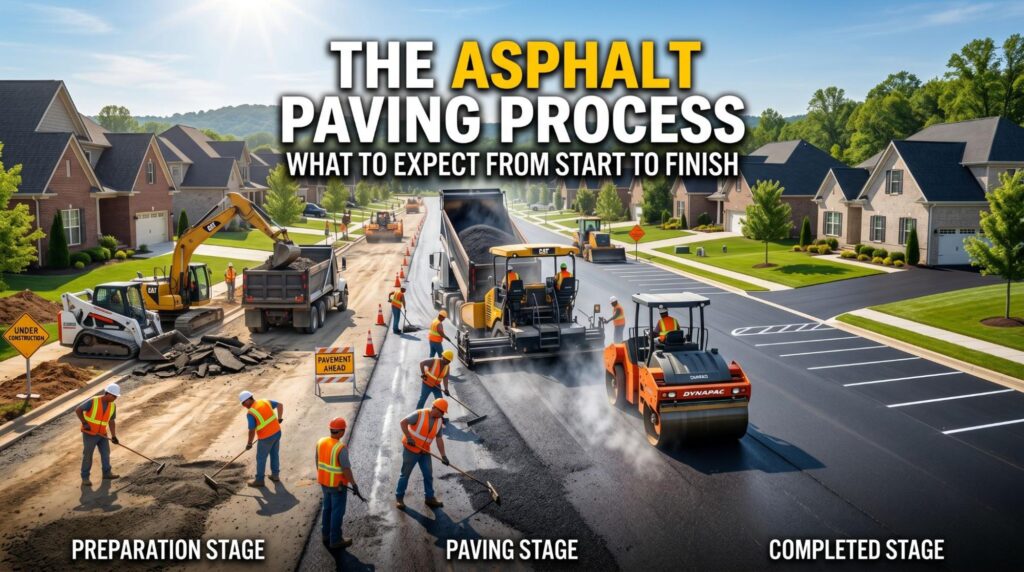
If you have never had a driveway or parking lot paved before, the process can feel like a mystery. Trucks roll in, equipment moves around, fresh black asphalt appears, and a day or two later you have a brand new surface. But behind that quick transformation is a careful, step by step process that determines how long your asphalt will last and how well it will perform.
Understanding the Asphalt Paving Process helps you make better decisions, ask the right questions, and feel confident in the work being done on your property. Whether you are planning a small residential driveway or a large commercial parking lot, the same core steps apply. This guide walks you through every stage from start to finish so you know exactly what to expect.
Why the Paving Process Matters
A driveway or parking lot is more than just a layer of asphalt. It is a multi layer system that depends on proper preparation, quality materials, and skilled installation. Skipping a step or rushing through one always shows up later in the form of cracks, potholes, sinking, or early failure.
When the process is done right, asphalt easily lasts 15 to 25 years with regular maintenance. When it is done poorly, problems can show up within just a few years. This is why working with an experienced contractor for asphalt paving in West Tennessee matters so much. Climate, soil conditions, and drainage all play a role, and the right team knows how to handle each one.
Planning a paving project? Call Quality Paving West TN for a free, on site estimate.
Step 1: Initial Consultation and Estimate
Every paving project starts with a conversation. A contractor visits your property, looks at the site, asks about your goals, and takes measurements. This is when you discuss what you want, what your budget looks like, and any specific concerns you have with the current surface or layout.
During this stage, the contractor will typically:
- Measure the area in square feet
- Inspect the existing surface, if any
- Check drainage and grade conditions
- Discuss material options and thickness
- Review timeline and pricing
- Provide a written estimate
For homeowners exploring residential asphalt paving or property managers planning a commercial asphalt paving project, this step sets the foundation for everything that follows. A clear, detailed estimate prevents surprises later.
Step 2: Site Preparation for Paving
Once the project is approved, the real work begins with site preparation for paving. This is one of the most important stages because everything that follows depends on it.
Removing Existing Material
If there is an old driveway or parking lot in place, it usually needs to come out. Old asphalt, concrete, or worn out gravel is broken up and hauled away. For new construction, vegetation, soil, and debris are cleared from the area.
Excavation and Sub Grade Preparation
Once the surface is cleared, the subgrade is excavated to the proper depth. Most residential driveways need 4 to 6 inches of room for base and asphalt layers. Commercial lots typically need 6 to 10 inches depending on expected traffic loads.
The sub grade soil is then leveled, compacted, and inspected. Any soft or unstable areas are reinforced before any base material goes down. This is the part of the process that most homeowners never see, but it is what determines how long their driveway will last.
Step 3: Asphalt Grading and Base Preparation
After excavation, the next stage is asphalt grading and base preparation. This is where the foundation of the entire project comes together.
Building the Aggregate Base
A layer of crushed stone or gravel is spread across the sub grade. For most residential driveways, the base is 4 to 8 inches thick. For commercial parking lots or heavy use areas, the base can be 8 to 12 inches.
The aggregate base provides:
- A stable foundation that distributes weight
- Drainage that pulls water away from the asphalt
- Resistance against frost and freeze damage
- A consistent surface for asphalt to bond to
Grading and Slope
Grading is more than just leveling. The surface is shaped to direct water runoff away from buildings, garages, and the driveway itself. Proper slope is critical in West Tennessee because of the region’s heavy seasonal rainfall. Even a perfectly paved surface will fail early if water has nowhere to go.
Compaction
The base layer is then compacted using heavy rollers. Compaction removes air pockets, increases density, and creates the firm, stable surface needed before any asphalt is laid down. Skipping or rushing this step is one of the most common causes of early driveway failure.
Want a driveway built to last? Quality Paving West TN handles every base layer with care.
Step 4: Hot Mix Asphalt Production and Delivery
With the base in place, the asphalt itself comes next. Most paving projects use hot mix asphalt, which is produced at high temperatures in an asphalt plant.
What Is Hot Mix Asphalt?
Hot mix asphalt is a blend of crushed stone, sand, and liquid asphalt binder heated to around 300°F. It is mixed at the plant, loaded into trucks, and delivered to the job site while still hot. The temperature matters because the asphalt has to remain workable during placement and compaction.
Delivery and Timing
Delivery is timed carefully so the asphalt arrives at the right temperature. If it cools too much in transit, it becomes harder to work with and may not compact properly. This is why experienced paving teams coordinate closely with the asphalt plant during installation.
Step 5: Asphalt Installation Steps
This is the stage most people picture when they think of paving. The asphalt installation steps turn that hot mix material into a smooth, finished surface.
Spreading the Asphalt
A paving machine spreads the hot mix evenly across the prepared base. The thickness depends on the project. Residential driveways typically receive 2 to 3 inches of asphalt, while commercial lots get 3 to 4 inches or more for heavier traffic loads.
Joining and Edge Work
Where the asphalt meets driveways, sidewalks, garages, or curbs, the team handles the joints carefully to create a clean, sealed transition. Edges are shaped and angled for both appearance and durability.
Smoothing the Surface
The paving machine creates an even surface, but final smoothing is often done by hand around tight spots, corners, and edges. The goal is a consistent, professional finish across the entire surface.
Step 6: Asphalt Compaction
Once the asphalt is in place, the next stage is asphalt compaction. This is what gives the surface its long term strength and smoothness.
Heavy rollers move across the new asphalt, compressing the material and removing any air pockets. Compaction usually happens in three stages:
- Breakdown rolling for initial compaction right after spreading
- Intermediate rolling to refine the surface and increase density
- Finish rolling for a smooth, polished top layer
Proper compaction is essential. An asphalt surface that is not fully compacted will fail much faster, leading to early cracks, sinking, and rough texture. A skilled paving team treats this step as carefully as the installation itself.
Step 7: Asphalt Curing Time
After the surface is installed and compacted, it needs time to cool and cure. This is where many property owners get impatient, but giving the asphalt enough time is one of the most important parts of the entire process.
How Long Is the Asphalt Curing Time?
The asphalt curing time depends on the weather and the thickness of the surface. As a general rule:
- 24 to 48 hours before light vehicle traffic
- 3 to 5 days before heavy vehicles or parking in the same spot
- Several weeks before sealcoating is applied
- Up to 6 months for full hardening
The asphalt remains usable during the curing period, but it is still softening in heat and gradually settling into its final form. Avoiding heavy loads, sharp turns, and concentrated weight during the first few weeks helps preserve the surface.
Driveway Paving Process for Residential Projects
A typical driveway paving process for homeowners takes 1 to 3 days from start to finish, depending on size and conditions. Smaller driveways may be completed in a single day, while larger or more complex projects spread across multiple days.
A homeowner can usually expect:
- Day 1: Site preparation, excavation, and base work
- Day 2: Final grading, compaction, and asphalt installation
- Day 3 onward: Curing time before regular use
For new asphalt driveway installation projects, the timeline can shift slightly depending on weather and material delivery, but most homes are back to normal use within a few days.
Parking Lot Paving Process for Commercial Projects
The parking lot paving process follows the same core steps but on a larger scale. Commercial paving takes longer, involves more coordination, and often happens in phases to keep businesses operating during construction.
Property managers planning a commercial asphalt paving project should expect:
- Detailed site planning and traffic flow review
- Phased construction to minimize disruption
- Heavier base layers for higher vehicle loads
- Striping, signage, and ADA compliance after installation
- Sealcoating and ongoing maintenance scheduling
The right contractor manages timelines carefully so that the business stays open and customers can still access the property whenever possible.
Asphalt Paving in Jackson TN and Across West Tennessee
For property owners across the region, asphalt paving in Jackson TN and surrounding cities follows the same step by step process explained above. Local knowledge matters when it comes to drainage, soil conditions, and seasonal timing.
Quality Paving West TN serves Jackson, Milan, Dyersburg, Lexington, Huntingdon, Camden, and other communities across West Tennessee with full service residential and commercial paving. Our team handles every stage of the process with the same care and attention, from initial site visit to final compaction.
Ready to get started? Quality Paving West TN delivers reliable paving across West Tennessee.
Tips for Property Owners During the Paving Process
Once your project is scheduled, a few simple steps make the process go more smoothly:
- Clear the area of vehicles, equipment, and personal items
- Keep pets and children away from the work area
- Plan for alternative parking during installation
- Allow space for trucks and paving equipment to maneuver
- Avoid driving on the new surface until the contractor says it is ready
- Follow curing time guidelines closely
- Schedule sealcoating after the recommended cure period
These small steps protect the work, keep the schedule on track, and help the finished asphalt perform the way it should.
Why Choose Quality Paving West TN
The paving process only works as well as the team behind it. Quality Paving West TN brings years of experience, professional equipment, and a careful, step by step approach to every job. From small driveways to large commercial lots, our team delivers smooth, lasting surfaces built for the West Tennessee climate.
We treat every project with the same care, whether it is a homeowner’s first driveway or a property manager’s tenth parking lot.
Frequently Asked Questions
How long does the asphalt paving process take?
Most residential driveways take 1 to 3 days. Larger commercial lots may take several days to a few weeks.
How soon can I drive on new asphalt?
You can usually drive on it within 24 to 48 hours after installation.
When should I sealcoat my new driveway?
Wait 6 to 12 months after installation before applying the first sealcoat.
What is the best season for asphalt paving in West Tennessee?
Late spring through early fall offers the most consistent weather for proper installation and curing.
Does new asphalt need maintenance right away?
Avoid heavy loads and sharp turns during curing. Regular maintenance starts after the first sealcoating cycle.
Get Your Free Asphalt Paving Quote
A well planned paving project starts with a clear estimate and an experienced team. Quality Paving West TN offers free, on site quotes for homeowners and businesses across Jackson and West Tennessee. From driveways to parking lots, we walk you through the entire process and deliver work built to last.
Call Quality Paving West TN today for your free paving quote.