
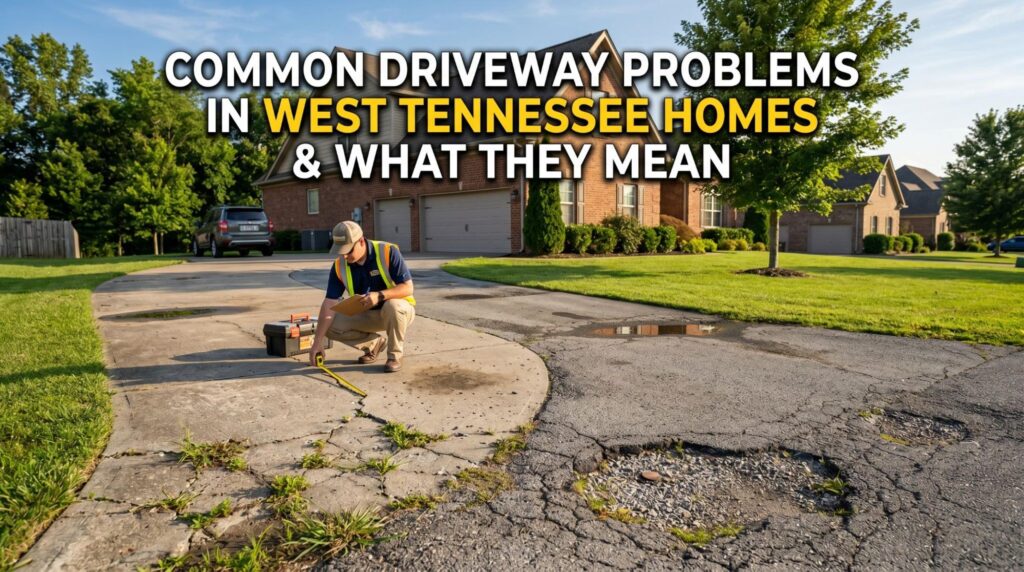
Your driveway puts in serious work every day. It carries the weight of multiple vehicles, handles seasonal temperature swings, sits through heavy rain, and bakes in the summer sun. Over time, that constant exposure causes wear and tear that shows up in different ways. Some signs are obvious, like potholes and cracks. Others are subtle, like faded color or water that pools after a storm.
Each of these issues tells a story about what is happening under the surface. Spotting them early gives you the chance to repair small problems before they turn into expensive ones. This guide walks you through the most Common Driveway Problems West Tennessee homeowners deal with, what each one means, and what to do about it.
Why Driveway Problems Show Up Faster in West Tennessee
The local climate has a lot to do with how driveways age. West Tennessee weather is a mix of humid summers, cool winters, and frequent heavy rain. Asphalt expands in the heat, contracts in the cold, and absorbs moisture every time it rains.
These constant changes wear down the surface, especially without regular maintenance. Soil conditions also play a role. Clay heavy soils common in parts of West Tennessee shift more than sandy soils, which puts extra stress on driveways over time. Combine all of that with daily traffic, and you have a recipe for driveway problems that homeowners deal with year after year.
Recognizing the early signs of driveway damage is the first step to keeping your driveway in solid shape for decades.
Spot something off with your driveway? Call Quality Paving West TN for a free inspection.
Problem 1: Asphalt Cracks
Cracks are the most common issue homeowners notice. They show up in different shapes and sizes, and each type points to a different cause.
Hairline Cracks
These small, narrow cracks usually appear within the first few years of a driveway’s life. They are caused by minor surface shrinkage and aging. On their own, hairline cracks are not a major problem, but they let water in if they are not sealed. Filling them early is one of the easiest driveway maintenance tasks you can do.
Block Cracks
Block cracks form a grid pattern across the surface. They are caused by long term shrinkage of the asphalt as it loses flexibility with age. Block cracks usually appear in older driveways that have not been sealcoated regularly.
Edge Cracks
Edge cracks form along the outer edges of the driveway. They are usually caused by weak edge support, poor drainage, or heavy vehicles driving close to the edge. Without quick repair, edge cracks turn into crumbling driveway edges over time.
Alligator Cracks
Alligator cracks look like a rough pattern of interconnected cracks across the surface. They are one of the more serious asphalt cracks because they usually point to base layer failure. When you see alligator cracking, the foundation underneath the asphalt is no longer doing its job, and a full repair or replacement may be needed.
Problem 2: Potholes
Potholes are one of the most visible asphalt driveway issues and one of the most damaging. They form when water seeps into small cracks, freezes, expands, and breaks up the surface. Once a pothole appears, it grows quickly under vehicle weight.
Why Potholes Form
A few common causes include:
- Water trapped under the asphalt
- Freeze and thaw cycles in winter
- Weak base layer below the surface
- Unrepaired cracks that let water in
- Heavy vehicles driving over weakened areas
What to Do About Potholes
Driveway potholes should be repaired as soon as they appear. The longer they sit, the bigger they get and the more they damage the surrounding asphalt. A professional driveway repair involves cleaning out the hole, squaring off the edges, and filling it with fresh hot mix asphalt that bonds properly with the surrounding surface.
Got a pothole forming? Quality Paving West TN handles fast, lasting repairs.
Problem 3: Standing Water on Driveway
Water that lingers after a rainstorm is a sign that something is wrong with the surface, the grade, or the drainage. Standing water on driveway surfaces is one of the most overlooked but most damaging issues homeowners deal with.
Why It Matters
Asphalt is built to shed water, not hold it. When water sits on the surface, it slowly works its way into small openings and weakens the base layer. Over time, standing water leads to cracks, potholes, sinking, and full surface failure.
Common Causes
- Poor original grading during installation
- Settling that creates low spots
- Failing drainage around the property
- Blocked or broken gutters and downspouts
- Sunken sections from base layer damage
How to Fix It
The fix depends on the cause. Small low spots can sometimes be corrected with a resurfacing project that restores proper slope. Larger drainage issues may need regrading or even drainage system upgrades. A paving contractor can identify the exact cause and recommend the right solution.
Problem 4: Driveway Sinking and Settling
A driveway should sit level and stable. When sections start to sink or settle, that is a clear sign of a problem underneath.
What Causes Sinking
Driveway sinking and settling usually comes from one of these issues:
- Soft or poorly compacted soil under the driveway
- Water erosion that has washed away the base material
- Tree roots disrupting the foundation
- Original installation that did not use enough base material
- Heavy vehicle damage on weak sections
What It Means for Your Driveway
Sinking sections create uneven surfaces that hold water, damage vehicles, and look unappealing. They also tend to get worse over time. In some cases, the affected area can be removed and replaced. In more advanced cases, the entire driveway may need to be reconstructed with a proper base.
Problem 5: Faded Asphalt Driveway
A faded asphalt driveway is more than just a cosmetic issue. The fading is a sign that the surface is breaking down and losing its protective qualities.
Why Asphalt Fades
New asphalt is deep black because of the binder that holds it together. Over time, UV rays from the sun oxidize the binder, drying it out and turning the surface gray. As the binder weakens, the asphalt becomes brittle, less flexible, and more vulnerable to cracking.
How to Fix It
The fix for a faded driveway is sealcoating. A fresh layer of asphalt sealer restores the black color, blocks UV rays, and protects the surface from future damage. Most driveways need sealcoating every 2 to 3 years to stay in top shape.
Problem 6: Driveway Edge Crumbling
The edges of an asphalt driveway are the most vulnerable part of the surface. They lack the support of surrounding pavement and often crumble over time.
Why Edges Crumble
Driveway edge crumbling usually points to one or more of these issues:
- Lack of solid edge support from soil or gravel
- Vehicles driving too close to the edge
- Water erosion at the base of the edge
- Original installation that did not extend the base layer beyond the surface
- Weed and vegetation growth that loosens the asphalt
How to Repair It
Small areas of edge damage can be filled and reshaped. Larger sections may need to be removed and rebuilt. Adding gravel or soil along the edge after repair helps prevent the same problem from coming back.
Worried about your driveway edges? Quality Paving West TN restores them fast.
Problem 7: Oil and Chemical Stains
Stains are common, especially in driveways used for daily parking. Oil, gas, and chemical drips are harsh on raw asphalt and can soften the surface if left untreated.
What Stains Mean
Stains do more than just look bad. They break down the binder in asphalt and create soft spots that wear out faster than the rest of the driveway. Frequent oil drips in the same spot will eventually create a dent or hole if the surface is not protected.
How to Handle Stains
- Clean spills as soon as possible
- Use a degreaser for older or stubborn stains
- Pressure wash the area
- Sealcoat regularly to add a protective barrier
- Repair any soft spots that have already formed
Problem 8: Raveling and Surface Loss
Raveling is when small pieces of asphalt start breaking away from the surface. It looks like loose gravel or rough texture and points to a deeper material problem.
What Causes Raveling
- Aging and dried out binder
- Poor original mix or installation
- Heavy vehicle traffic on weakened sections
- Long term lack of sealcoating
What to Do About It
Light raveling can be addressed with sealcoating and minor patching. Heavy raveling usually means the surface needs resurfacing or full replacement, depending on the depth of the damage.
Why Driveways Crack: A Closer Look
Many homeowners wonder why driveways crack in the first place. The short answer is that asphalt is a flexible material that responds to weight, temperature, and moisture. Over time, all three combine to create stress that leads to cracking.
Common factors include:
- Daily vehicle weight and traffic patterns
- Hot summer days expanding the surface
- Cold winter nights contracting the surface
- Water seeping in and freezing
- Soil shifting underneath
- Heavy loads from delivery trucks or construction vehicles
- Aging asphalt that has lost flexibility
Cracking is not always avoidable, but it can be slowed dramatically with regular sealcoating and timely crack repair.
When to Call a Paving Contractor
Knowing when to call a paving contractor is the difference between a small fix and a major project. A few signs point to the right moment.
Call a Contractor When You See
- Multiple cracks spreading across the surface
- New potholes forming after a storm
- Standing water that does not drain
- Sinking or uneven sections
- Crumbling edges getting worse
- A faded surface that has not been sealcoated in 3+ years
- Repairs from previous years that are starting to fail
Catching these issues early saves money and extends the life of your driveway. A professional contractor can quickly tell whether you need a small repair, a resurfacing, or a full replacement.
Not sure what your driveway needs? Quality Paving West TN offers free assessments.
Residential Driveway Repair in West Tennessee
For homeowners across the region, residential driveway repair in West Tennessee typically involves a mix of crack filling, pothole patching, and sealcoating. Most homes do not need full replacement. Instead, regular small repairs and a consistent maintenance schedule keep driveways in great shape for decades.
A reliable local contractor handles all of these services and creates a long term plan that fits your driveway, your budget, and the West Tennessee climate.
Driveway Repair in Jackson TN and Surrounding Areas
For homes in larger cities, driveway repair in Jackson TN projects often combine multiple services in one visit. A typical visit might include crack filling, pothole patching, edge repair, and sealcoating, all completed in a day or two.
Quality Paving West TN serves Jackson, Milan, Dyersburg, Lexington, Huntingdon, Camden, and surrounding communities with full service driveway repair and maintenance. From small fixes to major projects, our team brings honest assessments, fair pricing, and lasting workmanship to every job.
Tips to Prevent Common Driveway Problems
A little prevention goes a long way. These simple habits help avoid the most common forms of asphalt damage before they start.
- Sealcoat every 2 to 3 years
- Fill small cracks as soon as they appear
- Patch potholes early
- Clean up oil and chemical spills quickly
- Avoid heavy vehicles on residential driveways
- Make sure water drains away from the surface
- Schedule annual inspections with a paving contractor
Consistent care is what keeps a driveway looking good and performing well for the long haul.
Why Choose Quality Paving West TN
Quality Paving West TN is the trusted choice for full service driveway repair across Jackson, TN and surrounding communities. From small crack repairs to full resurfacing and replacement projects, our team helps homeowners protect one of the most important parts of their property. We deliver honest advice, fair pricing, and reliable workmanship on every job.
Frequently Asked Questions
What is the most common driveway problem in West Tennessee?
Cracks are the most common issue, followed by faded surfaces and edge crumbling.
How quickly should I fix a pothole in my driveway?
As soon as possible. Potholes grow fast and damage the surrounding asphalt.
Can a sinking driveway be repaired?
Yes, depending on the cause. Some areas can be patched, while larger issues may need reconstruction.
How often should I sealcoat my driveway?
Every 2 to 3 years for most residential driveways in West Tennessee.
Do small cracks really need to be repaired right away?
Yes. Small cracks let water in, which leads to bigger problems. Filling them early is fast and affordable.
Get a Free Driveway Inspection Today
If your driveway is showing signs of wear, the smartest next step is a professional inspection. Quality Paving West TN offers free, on site driveway assessments for homeowners across Jackson and West Tennessee. From minor repairs to full replacement, our team helps you choose the right service at the right time.
Call Quality Paving West TN today for your free driveway inspection.