
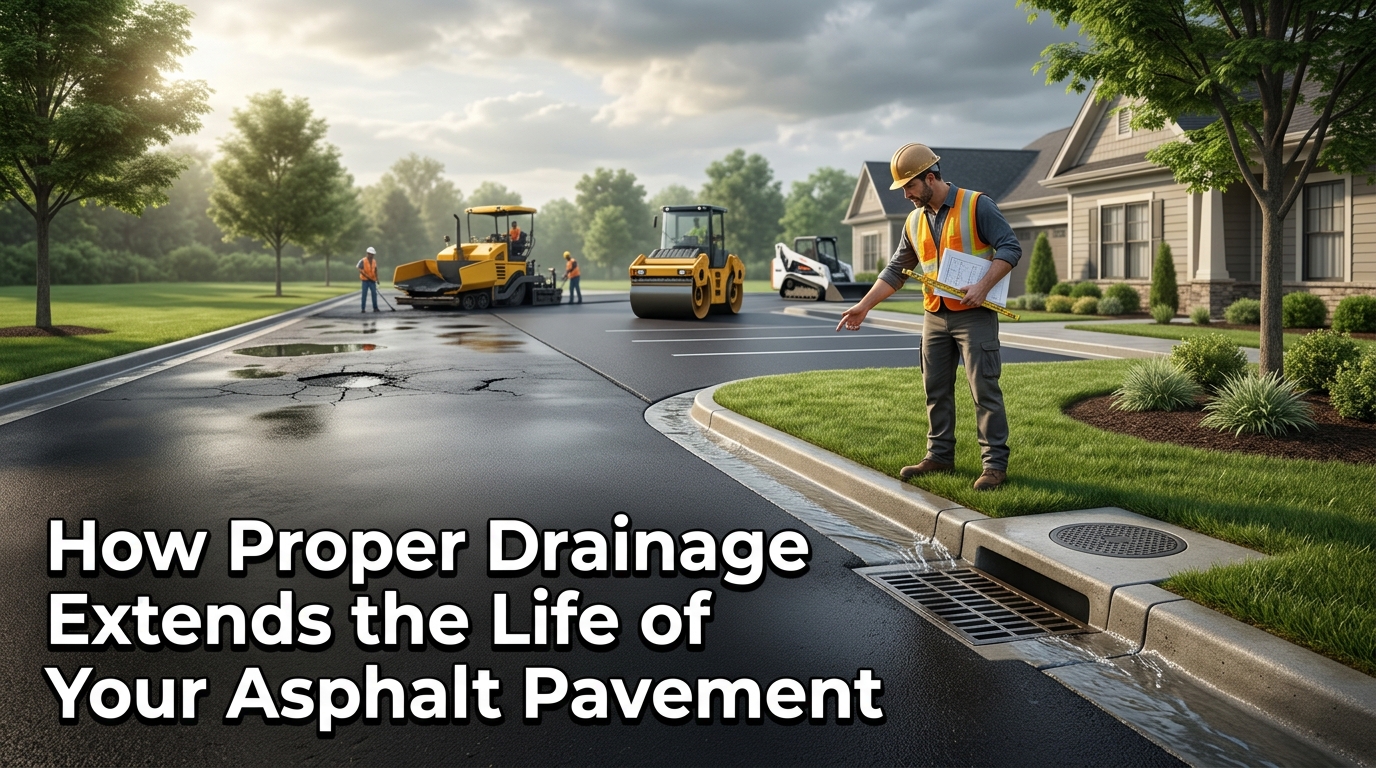
If there’s one thing that quietly destroys more asphalt than anything else, it’s water. Not traffic, not the sun, water. A driveway or parking lot can look perfectly fine on the surface while poor drainage slowly undermines it from below, and by the time cracks and potholes appear, the damage is well underway. It’s the invisible factor behind most premature pavement failure.
The flip side is encouraging: get drainage right and you dramatically extend the life of your asphalt, often by years. Proper slope, grading, and water management keep moisture from ever reaching the vulnerable base beneath your pavement. In this guide, we’ll explain exactly how water damages asphalt, how good drainage prevents it, and what you can do to protect your investment for the long haul.
| → Worried about water pooling on your pavement? Quality Paving handles grading and drainage to protect your surface for the long haul. Call +1 731 927 1097 or request a free estimate. |
Why Water Is Asphalt’s Worst Enemy
Asphalt itself is fairly water-resistant on the surface, but it’s not waterproof, and the base beneath it is even more vulnerable. When water sits on pavement or seeps into cracks, it works its way down to the sub-base, the compacted layer of aggregate and soil that supports everything above it.
Once water reaches the base, the trouble begins. It softens the soil, washes away fine material, and weakens the base’s ability to support the asphalt. A weak base can no longer hold the surface rigid, so it flexes, cracks, and eventually collapses into potholes and sunken areas. Nearly every serious pavement failure traces back to water getting where it shouldn’t.
The Freeze-Thaw Multiplier
In West Tennessee, water damage gets worse in winter. Water trapped in cracks and the base freezes on cold nights, expands by about 9 percent, and pries the pavement apart. Repeated freeze-thaw cycles turn minor water intrusion into major structural damage, which is why standing water is especially dangerous heading into cold weather.
How Poor Drainage Shows Up
You can often spot drainage problems before they cause visible pavement damage. Watch for these warning signs:
- Water that pools and sits on the surface for hours or days after rain instead of draining away.
- Areas that stay damp or grow moss and algae long after the rest of the surface has dried.
- Erosion, washed-out gravel, or soft spots at the pavement edges.
- Cracks and potholes that concentrate in low-lying areas where water collects.
- Water running toward your home, garage, or building rather than away from it.
If you recognize any of these on your property, drainage should move to the top of your maintenance list. Catching it early, before the base is compromised, is far cheaper than repairing the failure it causes.
The Foundation of Good Drainage: Slope and Grading
Proper drainage starts with proper slope. Pavement should be graded so water runs off the surface toward the edges or designated drainage points, never pooling in the middle or flowing toward a structure. Even a slight, correctly designed slope is enough to keep a surface shedding water effectively.
This is why grade work is such a critical part of any paving project. Getting the slope right during installation, or correcting it during resurfacing, is the single most important thing you can do for drainage. Water management built into the surface from the start prevents the vast majority of drainage-related failures.
Drainage for Driveways vs. Parking Lots
Residential driveways usually need straightforward drainage, a proper slope that carries water off to the sides and away from the house. The main goals are avoiding pooling and keeping water from flowing toward the garage or foundation.
Commercial parking lots are a bigger challenge. Large, relatively flat expanses collect a lot of water, so they require careful grading toward catch basins and drains, and sometimes additional drainage infrastructure, to move that volume away without pooling. Poor drainage on a big lot causes damage fast because there’s so much surface area collecting water.
The Role of Sealcoating in Water Protection
Drainage keeps water moving off your surface, but sealcoating is what keeps water from soaking into the surface in the first place. The two work together. As asphalt ages and oxidizes, it becomes more porous, tiny voids open up that let water seep in. A fresh coat of sealer fills those voids and restores a tight, water-resistant top layer.
Think of sealcoating as a raincoat for your pavement and drainage as the gutters that carry the water away. You want both. A surface that’s sealed but poorly drained still has water pooling and pressing against it, while a well-drained surface that’s never sealed slowly grows porous and starts absorbing moisture. Combining regular sealcoating with proper drainage gives your asphalt the strongest possible defense against its number-one enemy.
| → Seeing puddles that won’t drain? Let our team diagnose the cause before it damages your base. Contact us for a free drainage evaluation. |
How to Protect Your Pavement’s Drainage Over Time
Good drainage isn’t only about installation, it’s also about upkeep. A few habits keep water moving the way it should:
- Keep drains, channels, and catch basins clear of leaves, dirt, and debris so water can flow freely.
- Fill cracks promptly, every open crack is a pathway for water to reach the base.
- Sealcoat regularly to keep the surface tight and water-resistant.
- Watch for new low spots or pooling after rain and address settling before it worsens.
- Keep landscaping and soil from washing onto and blocking the pavement edges.
These simple steps, combined with a properly graded surface, keep water off your base and add real years to your pavement’s life. Drainage maintenance is some of the highest-return upkeep you can do.
How West Tennessee’s Soil Makes Drainage Even More Important
Drainage matters everywhere, but it matters even more in our region because of the ground we build on. West Tennessee soils tend to be clay-heavy, and clay behaves in a way that makes water management critical. Clay absorbs water and swells, then dries and shrinks, and that constant expansion and contraction stresses whatever sits on top of it.
When water isn’t drained away efficiently, it saturates that clay base, softening it and amplifying the swell-and-shrink cycle beneath your pavement. The result is uneven support, movement, and cracking, even on asphalt that looked solid. This is exactly why local experience counts: a contractor who understands how West Tennessee ground responds to moisture builds drainage and base preparation that account for it, rather than applying a generic approach that fails in our conditions.
Fixing Drainage Problems on Existing Pavement
If your existing driveway or lot already has drainage issues, don’t ignore them, they only get worse. Depending on severity, solutions range from regrading and adding proper slope, to installing or clearing drainage features, to resurfacing with corrected grading, to full replacement if the base has already been damaged.
The right fix depends on how far the problem has progressed, which is exactly why an expert evaluation matters. Catching and correcting drainage early can save you from a full replacement down the road. An experienced contractor can diagnose the cause and recommend the most cost-effective solution.
Conclusion
Water is the quiet destroyer of asphalt, and drainage is your best defense. When your pavement is properly sloped and graded, water runs off harmlessly instead of soaking into the base and setting up the cracks, potholes, and freeze-thaw damage that end a surface’s life early. Good drainage, built in from the start and maintained over time, is one of the highest-return investments you can make in your pavement.
If you’re planning a new surface or fighting pooling on an existing one, getting the drainage right is where it all begins. We’re glad to help you diagnose problems and build water management that protects your pavement for decades.
| → Good drainage is the secret to pavement that lasts. Let Quality Paving build it in from the start or fix what’s failing now. Call +1 731 927 1097 or get your free estimate today. |
Frequently Asked Questions
Q1. How does water damage asphalt pavement?
Water seeps into cracks and pooling areas and reaches the sub-base, where it softens the soil, washes out fine material, and weakens the base’s support. This leads to flexing, cracking, and potholes. In winter, trapped water freezes and expands, prying the pavement apart.
Q2. How do I know if my driveway has a drainage problem?
Look for water pooling on the surface after rain, damp spots that stay wet, moss or algae growth, erosion at the edges, cracks concentrated in low areas, and water flowing toward your home. Any of these signals a drainage issue worth addressing early.
Q3. Can proper drainage really make asphalt last longer?
Yes, significantly. Keeping water off the base prevents the softening, cracking, and freeze-thaw damage that cause most premature pavement failure. Proper slope, grading, and drainage maintenance can add years to a driveway or parking lot’s life.
Q4. What causes water to pool on a driveway?
Pooling is usually caused by improper slope or grading, settling that creates low spots, or blocked drainage. Water that can’t run off collects, soaks into the base, and accelerates damage. Regrading or correcting the slope typically solves it.
Q5. How do you fix drainage problems on an existing asphalt lot?
Solutions range from regrading and adding proper slope, to clearing or installing drainage features, to resurfacing with corrected grading, up to full replacement if the base is already damaged. The right fix depends on severity, so an on-site evaluation is the best first step.