
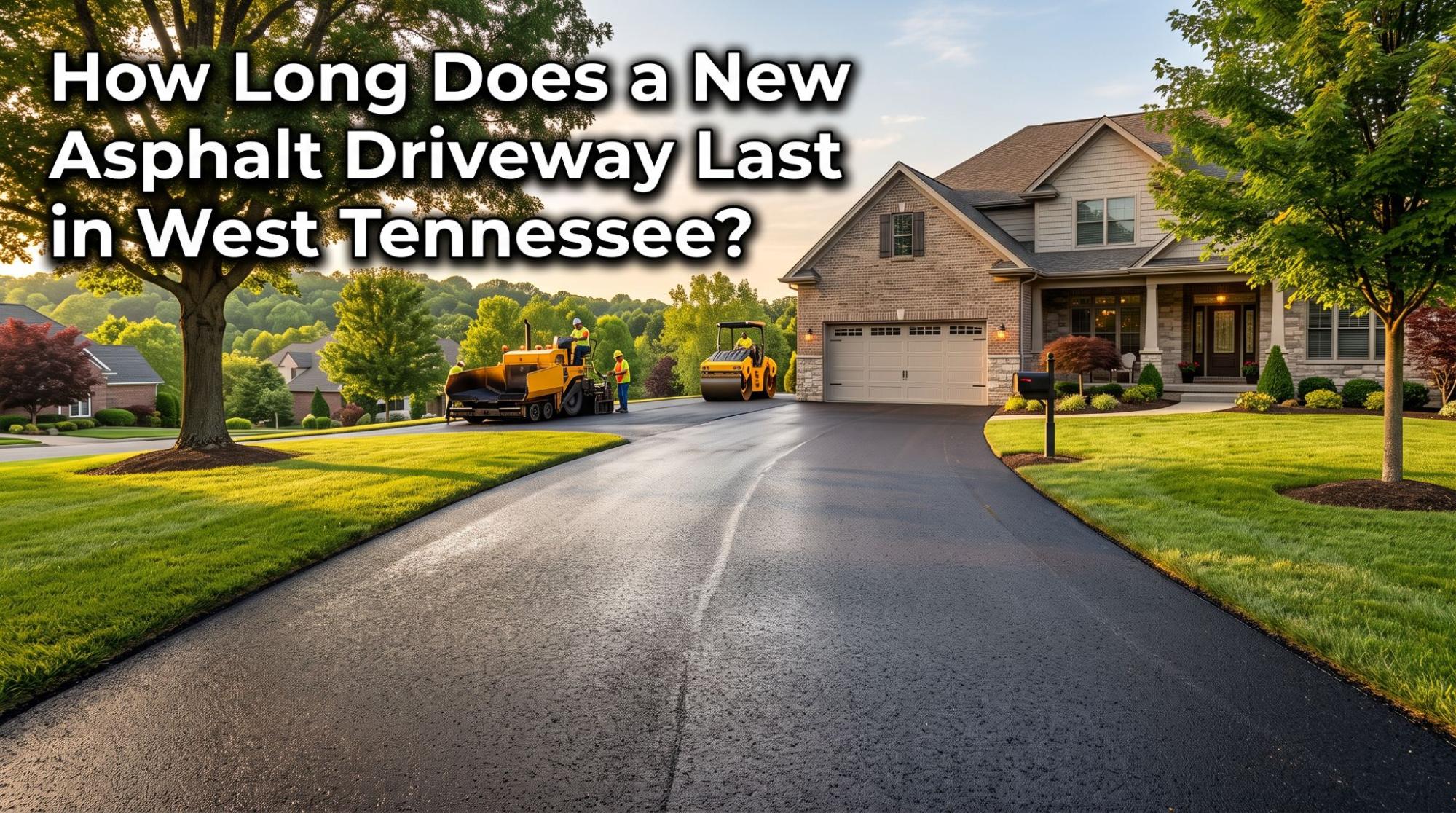
A new asphalt driveway is one of the smartest upgrades you can make to a West Tennessee home. It boosts curb appeal, gives you a clean, mud-free surface, and adds real value to your property. But before you invest, there’s one question almost every homeowner asks us first: how long will it actually last?
The honest answer is that a properly installed asphalt driveway in West Tennessee typically lasts 15 to 20 years, and often up to 25 years or more with the right care. That’s a wide range, and where your driveway lands on it depends on a handful of factors you can actually control. In this guide, we’ll walk you through exactly what determines the asphalt driveway lifespan in our part of Tennessee, the warning signs that yours is aging, and the simple maintenance habits that can add years to your investment.
→ Curious how much life your current driveway has left, or ready for a fresh one? Quality Paving offers free, no-pressure estimates across West Tennessee. Call +1 731 927 1097 or request your free estimate today.
The Short Answer: Average Asphalt Driveway Lifespan
Nationally, the asphalt industry puts the average lifespan of a residential asphalt driveway at 15 to 20 years. Here in West Tennessee, well-built driveways regularly reach the upper end of that range because our winters are milder than the Northeast or Midwest, where repeated deep freezes tear pavement apart.
That said, “average” hides a lot. Two driveways poured on the same street can age completely differently. One might look tired and cracked at year 10 while the neighbor’s still looks sharp at year 22. The difference almost always comes down to three things: how well it was installed, how the water drains, and whether the owner kept up with basic maintenance like sealcoating and crack filling.
What “Lasting” Actually Means
It helps to separate two ideas. The structural life of your driveway is how long the base and asphalt hold together as a functional surface. The cosmetic life is how long it stays smooth, dark, and attractive. Sealcoating mostly protects the cosmetic life and slows the wear that eventually becomes structural. A driveway can be structurally sound but look faded and gray, or it can look fine on top while cracks below quietly let water do damage.
What Determines How Long Your Driveway Lasts
If you want the full 20-plus years out of your driveway, these are the factors that matter most. Some are decided the day it’s installed; others are up to you over time.
1. Quality of the Installation and Sub-Base
This is the single biggest factor, and it’s invisible once the job is done. A driveway is only as strong as the ground beneath it. A properly prepared sub-base means the soil is graded, compacted, and topped with a stable layer of crushed aggregate before any asphalt is laid. Skip or rush that step and the driveway will settle unevenly, crack early, and fail long before its time. This is exactly why the crew you hire matters so much, and why we do our own grade work and ground preparation on every job rather than paving over whatever’s there.
Asphalt thickness matters too. A residential driveway generally needs at least 2 to 3 inches of compacted asphalt over a solid base. Go thinner to save money and you’ll pay for it in cracks and potholes within a few years.
2. Drainage and Water Management
Water is asphalt’s number one enemy. When water pools on the surface or seeps into the base, it softens the ground, washes out fine material, and freezes and expands in cold snaps. Good drainage, proper slope, and a driveway that sheds water toward the edges will dramatically outlast one where water sits. If you notice puddles that linger a day after rain, that’s a red flag worth addressing early.
3. West Tennessee’s Climate and Freeze-Thaw Cycles
We’re lucky compared to northern states, but West Tennessee still sees a real freeze-thaw cycle. Water gets into small cracks, freezes on cold nights, expands, and widens those cracks a little more each time. Our hot, humid summers also cause the asphalt binder to oxidize and grow brittle under intense UV. This combination of summer heat and winter freeze is exactly why seasonal maintenance is so effective here, sealing the surface protects it from both extremes.
4. Traffic and How You Use It
A driveway that only sees two family cars will outlast one that regularly parks heavy trucks, RVs, or a boat trailer. Concentrated weight, sharp turning, and vehicles parked in the same spot for long periods all speed up wear. It doesn’t mean you can’t use your driveway; it just means heavier use makes maintenance more important.
Signs Your Asphalt Driveway Is Aging
Asphalt gives you plenty of warning before it fails completely. Catch these early and a repair is cheap; ignore them and you’re looking at a full replacement. Watch for:
- Faded, gray color instead of rich black, a sign the protective binder is oxidizing.
- Small hairline or spider-web cracks, which let water into the base if left open.
- Larger interconnected cracks that look like alligator skin, often a base problem.
- Potholes or soft, sunken spots where the surface has failed.
- Water pooling in areas that used to drain, hinting at settling or drainage issues.
- Crumbling or raveling edges where loose stones come free.
The good news is that most of these early signs are fixable. Crack filling and sealcoating can reset the clock on a driveway that’s just showing its age, while patchwork handles isolated damage without a full tear-out.
→ Not sure whether your driveway needs sealcoating, crack filling, or a full replacement? Our licensed team will take a look and give you honest advice. Get in touch for a free inspection.
How to Make Your Driveway Last Longer
You have more control over your driveway’s lifespan than you might think. A little upkeep goes a long way, and none of it is complicated.
Sealcoat Every 2 to 3 Years
Sealcoating is the most cost-effective thing you can do for asphalt. It adds a protective layer that blocks UV rays, water, oil, and gas, the substances that break asphalt down. A good sealcoat every two to three years can add years to your driveway for a fraction of replacement cost. Most homeowners find it pays for itself many times over.
Fill Cracks Before They Grow
A crack is an open door for water. Filling cracks promptly with a proper hot rubber sealant stops water from reaching the base, where it does the most expensive damage. Small crack repairs are inexpensive; the base failures they prevent are not.
Keep It Clean and Draining
Clear leaves, dirt, and standing water. Fix drainage problems as soon as you spot them. Avoid letting oil and chemicals sit on the surface, and address any low spots that collect water. These small habits keep the surface healthy between professional services.
When It’s Time to Replace Instead of Repair
Repairs make sense when the base is still sound and the problems are on the surface. But once a driveway has widespread alligator cracking, multiple potholes, significant settling, or is simply past the 20-year mark and failing in several places, replacement is usually the smarter long-term investment. A fresh driveway installed with a proper base essentially resets the 20-year clock and often looks better than the original.
Not sure which camp you’re in? That’s exactly the kind of judgment call our team makes every day. An honest inspection will tell you whether you’re a candidate for repair and sealcoating or whether a new install will save you money over the next decade.
Conclusion
So, how long does a new asphalt driveway last in West Tennessee? Realistically, 15 to 20 years for most homeowners, and well beyond that with smart maintenance. The lifespan you get comes down to a quality installation, good drainage, and staying on top of sealcoating and crack filling. None of that is complicated, and all of it is worth it.
If you’re planning a new driveway or wondering whether yours has years left or is ready for replacement, we’re here to help you make the right call, no pressure, no guesswork.
→ A well-built, well-maintained asphalt driveway can serve your family for two decades or more. Whether you need a brand-new install or want to protect the one you have, Quality Paving is West Tennessee’s trusted choice. Call +1 731 927 1097 or contact us for your free estimate today.
Frequently Asked Questions
Q1. How long does an asphalt driveway last in Tennessee?
A properly installed asphalt driveway in West Tennessee typically lasts 15 to 20 years, and often 25 years or more with regular sealcoating, prompt crack filling, and good drainage. Installation quality and maintenance are the biggest factors in reaching the higher end of that range.
Q2. How often should I sealcoat my asphalt driveway?
Most residential asphalt driveways should be sealcoated every two to three years. The first sealcoat is usually applied 6 to 12 months after installation once the asphalt has cured. Sealcoating protects against UV, water, and oil, and significantly extends the driveway’s life.
Q3. What makes an asphalt driveway fail early?
The most common causes of early failure are a poorly prepared sub-base, thin asphalt, and poor drainage that lets water sit and seep into the base. Skipping maintenance like sealcoating and crack filling also shortens lifespan considerably.
Q4. Can you repair an old asphalt driveway or does it need replacing?
It depends on the base. If the underlying base is sound and the damage is on the surface, crack filling, patchwork, and sealcoating can extend the life for years. Widespread alligator cracking, multiple potholes, or major settling usually mean full replacement is the better value.
Q5. Does West Tennessee weather affect asphalt driveway lifespan?
Yes. Hot, humid summers oxidize and dry out asphalt, while winter freeze-thaw cycles widen existing cracks. Both are manageable with regular sealcoating and crack filling, which protect the surface from heat and moisture year round.