
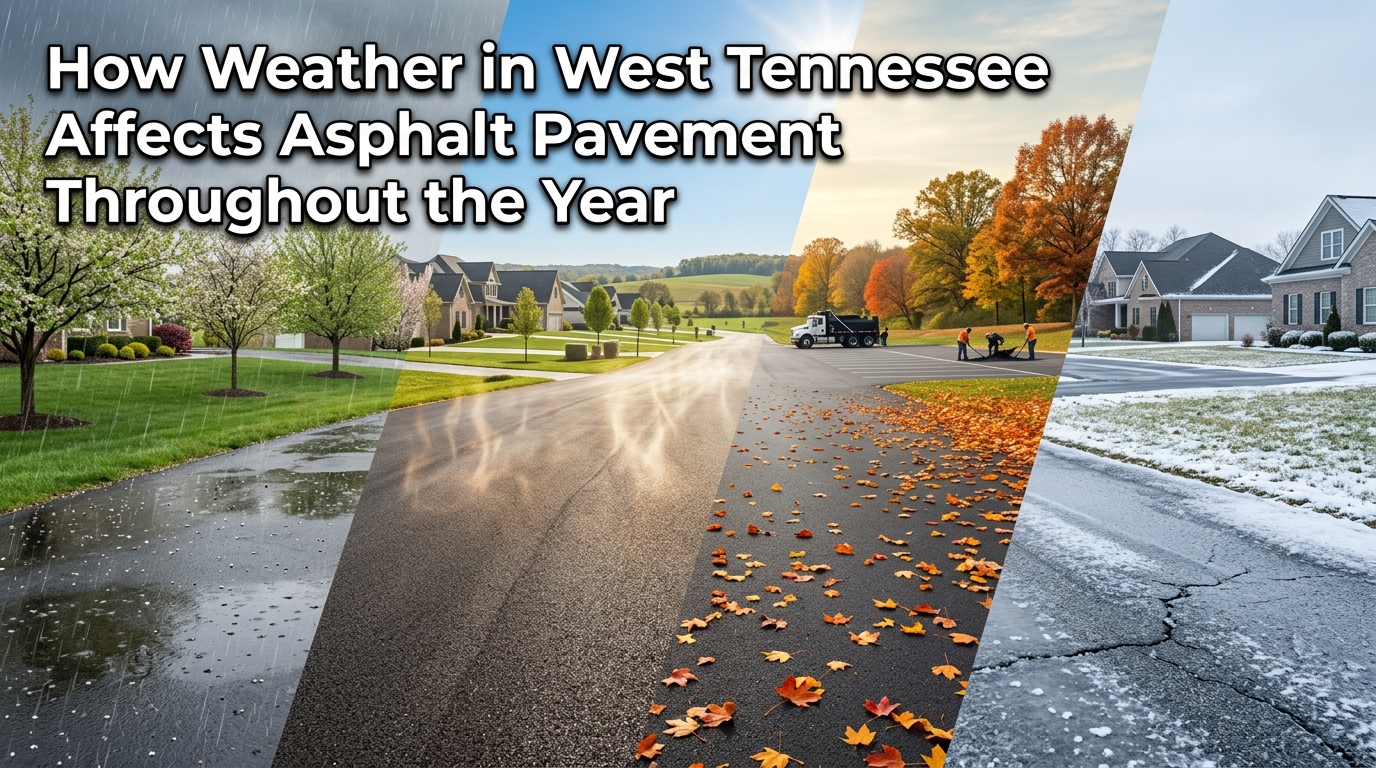
Asphalt looks tough, and it is, but it’s also surprisingly sensitive to the weather it lives under. Here in West Tennessee, your driveway or parking lot faces a full four-season workout: brutal summer heat and humidity, heavy spring rains, and just enough winter freeze to cause real trouble. Each season attacks asphalt in its own way, and understanding how helps you protect your investment before damage sets in.
The reassuring news is that asphalt weather damage is almost entirely preventable. Once you know what each season does to your pavement, you can time simple maintenance, sealcoating, crack filling, and drainage care, to head off the worst of it. Let’s walk through the year and see exactly what West Tennessee’s climate does to your asphalt, month by month.
| → Want your pavement ready for whatever the season throws at it? Quality Paving offers seasonal maintenance, sealcoating, and crack filling across West Tennessee. Call +1 731 927 1097 or request a free estimate. |
Why Asphalt Is So Sensitive to Weather
Asphalt is a flexible material made of aggregate (stone and sand) held together by a petroleum-based binder. That flexibility is a strength, it lets asphalt handle traffic and minor ground movement, but it also means asphalt expands, contracts, softens, and hardens in response to temperature and moisture. Over years of weather cycling, the binder oxidizes and grows brittle, and that’s when cracks begin.
The two forces that do the most damage are heat (which dries out and oxidizes the binder) and water (which infiltrates cracks and undermines the base, especially when it freezes). West Tennessee delivers plenty of both, so let’s break the year down.
Summer: Heat, UV, and Oxidation
West Tennessee summers are hot and humid, and that combination is hard on asphalt. Intense UV radiation and surface temperatures that can climb well past 120°F cause the binder to oxidize, essentially drying out and hardening. Fresh black asphalt slowly fades to gray, becomes brittle, and starts to crack.
Heat also softens the surface enough that heavy vehicles, sharp turns, or a boat trailer parked in one spot can leave depressions and ruts. And because asphalt expands in heat, it pushes against itself, widening any existing cracks.
How to Protect Asphalt in Summer
Summer is prime sealcoating season, ironically because the same heat that damages bare asphalt also helps sealcoat cure properly. A fresh sealcoat blocks UV rays and slows oxidation, keeping your surface flexible and dark. It’s the single best defense against summer wear.
Fall: The Maintenance Window
Fall is West Tennessee’s sweet spot for asphalt care, and the most overlooked. Temperatures are moderate, rain is manageable, and you have a clear window to prepare pavement for winter. This is the ideal time to inspect your surface, fill every crack, and address drainage before cold weather arrives.
The reason fall timing matters so much is what comes next. Any crack you leave open in the fall becomes a water channel in winter, and that water freezes, expands, and turns a hairline crack into a real problem. Sealing up before the first freeze is one of the highest-return maintenance moves you can make.
Winter: Freeze-Thaw Is the Real Threat
West Tennessee winters are mild by national standards, but that’s actually part of the danger. We don’t freeze solid and stay frozen; instead we cycle, freezing at night, thawing by day, over and over. That freeze-thaw cycle is the single most destructive thing that happens to asphalt all year.
Here’s the mechanism: water seeps into cracks and pores during the day. At night it freezes and expands by about 9 percent. That expansion pries the crack wider. By day it thaws and more water works in. Repeat this dozens of times across a winter and small cracks become big ones, and big cracks become potholes. This is exactly how most West Tennessee potholes are born.
Why Sealed Pavement Survives Winter
Pavement that was sealcoated and crack-filled before winter has no easy entry point for water. No water in the cracks means no freeze-thaw damage. That’s why the fall maintenance window is so valuable, it’s the difference between a driveway that sails through winter and one that emerges in spring covered in new cracks.
Spring: Rain, Runoff, and Revealed Damage
Spring brings heavy West Tennessee rains, and rain is where drainage problems show themselves. Water that pools instead of draining soaks into the base, softening the ground beneath your asphalt. Spring is also when winter’s damage becomes visible, potholes and cracks that formed under the surface finally break through.
This makes spring the ideal time for an inspection and repairs. Address the damage winter caused, correct any drainage issues that spring rains reveal, and you set yourself up for a summer of sealcoating and a healthy year ahead.
| → Not sure where your asphalt stands heading into the next season? Let our team inspect it and recommend the right timing for maintenance. Contact us for a free evaluation. |
How to Read Your Pavement’s Weather Wear
You don’t need to be an expert to tell how weather is affecting your asphalt, the surface tells you if you know what to look for. Learning to read these signs helps you act before small damage becomes expensive. Keep an eye out for the following:
- Graying and fading, the earliest sign of UV oxidation, meaning it’s time to sealcoat.
- Fine surface cracking that spreads over a hot summer, a sign the binder is drying and getting brittle.
- New or widening cracks appearing after winter, the fingerprint of freeze-thaw damage.
- Damp spots, moss, or algae that linger after rain, pointing to poor drainage and trapped moisture.
- Soft, tacky spots in peak summer heat where the surface is being deformed by weight.
Catching these signals early turns a major repair into a minor one. A quick seasonal walk-around, especially heading into summer and out of winter, is one of the cheapest and most valuable habits a property owner can build.
Humidity: The Overlooked West Tennessee Factor
West Tennessee doesn’t just get hot in summer, it gets humid, and that constant moisture in the air plays its own quiet role in asphalt wear. High humidity keeps the surface and base damp for longer after rain, slows drying, and encourages moss, algae, and organic growth in shaded or poorly drained areas. Those growths trap even more moisture against the surface.
Persistent dampness works hand in hand with heat and freeze-thaw to break down the binder and creep into the base. It’s one more reason a tight, sealed, well-draining surface matters so much here. Keeping water from lingering, through good slope, clean drainage, and regular sealcoating, counters the humidity that our climate serves up all year.
A Year-Round Maintenance Rhythm for West Tennessee
Put it all together and a simple seasonal rhythm keeps asphalt healthy in our climate:
- Spring: Inspect for winter damage, repair cracks and potholes, and fix drainage before summer.
- Summer: Sealcoat while temperatures are high so the coating cures fully and blocks UV.
- Fall: Do a final crack-filling pass and clear drainage to prepare for winter freeze-thaw.
- Winter: Keep the surface clear of standing water and ice buildup, and avoid harsh de-icing chemicals that degrade asphalt.
None of these steps is expensive on its own, but skipping them lets small seasonal damage compound year after year. Following the rhythm can add a decade to your pavement’s life.
Conclusion
West Tennessee’s weather works on your asphalt all year long, summer heat oxidizes it, spring rain tests its drainage, and winter freeze-thaw pries its cracks apart. The damage is real, but it’s also predictable, and predictable damage is preventable damage.
Match your maintenance to the seasons, sealcoat in the heat, fill cracks before the freeze, and repair in spring, and your pavement will outlast the weather by many years. If you’d like a partner who knows exactly how our local climate behaves, we’re ready to help.
| → Weather is relentless, but your asphalt doesn’t have to lose the fight. With well-timed seasonal maintenance from Quality Paving, your surface can shrug off West Tennessee’s heat, rain, and freeze. Call +1 731 927 1097 or get your free estimate today. |
Frequently Asked Questions
Q1. Does hot weather damage asphalt?
Yes. Intense summer heat and UV radiation oxidize asphalt’s binder, causing it to dry out, fade, and become brittle. High heat can also soften the surface enough for heavy vehicles to leave ruts. Regular sealcoating protects against UV and oxidation.
Q2. How does winter weather affect asphalt in Tennessee?
West Tennessee’s freeze-thaw cycles are the biggest winter threat. Water seeps into cracks, freezes, expands, and widens them repeatedly through the season, turning small cracks into potholes. Sealing cracks before winter prevents most of this damage.
Q3. What is the best time of year for asphalt maintenance?
Fall is ideal for crack filling and drainage prep before winter, while summer’s heat is best for sealcoating because it helps the coating cure. Spring is the right time to repair damage that winter revealed.
Q4. Why does asphalt crack in cold weather?
Asphalt contracts in cold and expands in heat. When water in existing cracks freezes, it expands about 9 percent and pries the cracks wider. Repeated freeze-thaw cycles are the main cause of winter cracking and pothole formation.
Q5. How can I protect my asphalt from weather damage?
Sealcoat every two to three years to block UV and water, fill cracks promptly before freeze-thaw season, keep the surface draining properly, and inspect it each spring. This seasonal routine prevents the vast majority of weather-related asphalt damage.