
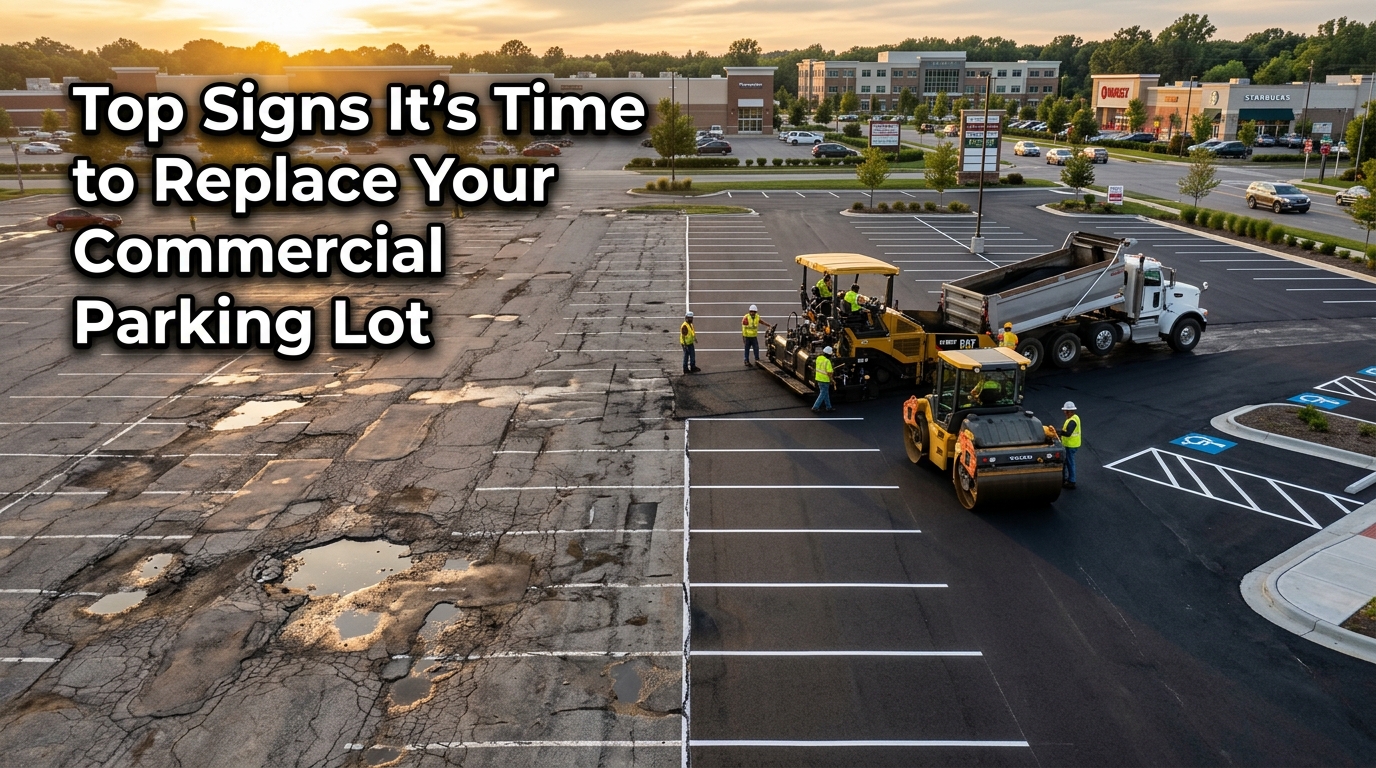
Your parking lot is the first thing customers see and the last thing they walk across on the way out. A smooth, clean lot signals a well-run business; a cracked, potholed one quietly tells people you cut corners, even if you don’t. Beyond appearances, a failing parking lot is a genuine liability: trip hazards, vehicle damage, and drainage problems can all land on your desk as complaints or claims.
The tricky part is knowing when repairs are still worth it and when you’re throwing good money after bad. Sealcoating and patching can extend a lot’s life for years, but there comes a point where a full commercial parking lot replacement is the smarter, cheaper long-term move. In this guide, we’ll cover the clearest signs it’s time to replace your lot, so you can make the call with confidence and budget accordingly.
→ Worried your parking lot is past its prime? Get a straight answer from a licensed commercial asphalt contractor. Quality Paving offers free on-site evaluations across West Tennessee, call +1 731 927 1097 or request your estimate.
Why Timing Your Parking Lot Replacement Matters
Asphalt fails gradually, then all at once. Small cracks let water into the base. Water weakens the base. A weak base leads to potholes and sinking, which spread faster every season. Owners who patch endlessly often spend more over five years than they would have on a single well-timed replacement, and they put up with an ugly, hazardous lot the whole time.
Replacing at the right moment does three things: it caps your repair spending, it removes liability risks, and it resets your property’s curb appeal. The key is recognizing when your lot has crossed from “maintainable” to “beyond repair.” Here’s how to tell.
Sign #1: Widespread Alligator Cracking
A few isolated cracks are normal and easily filled. But when cracks connect into a scaly, interlocking pattern that looks like alligator skin, that’s a structural warning, not a cosmetic one. Alligator cracking means the base beneath the asphalt has failed, usually from water intrusion or heavy loads over time.
You can’t seal your way out of alligator cracking. Sealcoating sits on the surface; it can’t rebuild a failed base. When this pattern covers a significant portion of your lot, patching becomes an endless game of whack-a-mole, and full replacement is the only real fix.
Sign #2: Potholes That Keep Coming Back
One pothole is a repair. Potholes that reappear in the same spots after patching, or that keep multiplying across the lot, point to a base that can no longer support traffic. Every pothole is also a liability, a customer’s twisted ankle or a damaged rim can turn into a claim fast.
Our patch work service is the right answer for the occasional pothole in an otherwise healthy lot. But when you’re patching constantly and the potholes win anyway, you’ve reached the point where replacement saves money and headaches.
Sign #3: Drainage Problems and Standing Water
After a rain, walk your lot. If you see water pooling in low spots that used to drain, the surface has settled or the grade has shifted. Standing water is more than an inconvenience: it accelerates every other form of damage by soaking into cracks and undermining the base. Over a West Tennessee winter, that trapped water freezes, expands, and tears the asphalt apart from below.
Minor drainage issues can sometimes be corrected with grade work and resurfacing. But widespread pooling across an aging lot usually signals that the whole surface needs to be replaced and re-graded to drain properly.
Sign #4: Faded, Raveling Surface and Crumbling Edges
Fresh asphalt is deep black. As it ages and oxidizes, it fades to gray and the surface begins to ravel, loose stones work free and the top layer becomes rough and porous. Crumbling edges, where the asphalt breaks away at the perimeter, are another late-stage sign.
If your lot is only faded, sealcoating can restore both the look and the protection. But when raveling is advanced and edges are falling apart across the lot, the asphalt has lost its integrity and is due for replacement.
A Quick Test
Rub your hand across the surface. If it comes away covered in loose sand and stone, the binder holding the asphalt together has largely broken down. That’s a strong indicator you’re near the end of this surface’s usable life.
→ Not sure if you need a patch, a resurface, or a full replacement? We’ll inspect your lot and recommend only what it actually needs. Contact us for a free assessment.
Sign #5: Your Lot Is Simply Old
A commercial asphalt parking lot generally lasts 20 to 25 years with good maintenance, and closer to 15 without it. If your lot is pushing or past that age and showing several of the problems above at once, replacement is almost always the better investment than continued repairs. Age alone isn’t a reason to replace, but age combined with multiple failure signs is.
Sign #6: Fading Line Striping and Compliance Concerns
Worn-out striping isn’t just unattractive, it creates confusion, wastes parking space, and can put you out of step with ADA accessibility requirements for marked accessible spaces and access aisles. If you’re already replacing or resurfacing the lot, it’s the perfect time to restripe correctly and bring layout and accessibility up to standard.
Faded striping on an otherwise good lot is a cheap fix. But when it accompanies cracking, potholes, and drainage failure, treat it as one more sign that the whole lot deserves a fresh start.
The Hidden Costs of Waiting Too Long
It’s tempting to squeeze another year or two out of a struggling lot, but delay usually costs more than it saves. Every season a failing lot stays in the ground, water works deeper into the base, small potholes grow, and the eventual replacement gets more expensive because there’s more damage to remove and re-grade.
There are softer costs, too. A rough, patched-over lot chips away at your business’s image every single day it’s in front of customers. It raises your liability exposure with every trip hazard and vehicle-damage risk. And endless patching ties up your maintenance budget in repairs that never actually fix the underlying problem. When you add those up, a well-timed replacement often turns out to be the cheaper path, not the pricier one.
Repair, Resurface, or Replace? How to Decide
Here’s a simple way to think about it. If the base is sound and problems are on the surface, repair and sealcoat. If the surface is worn but the base is mostly intact, resurfacing (a new asphalt layer over the old) may buy many more years at lower cost. If the base itself has failed, with widespread alligator cracking, recurring potholes, and drainage problems, full replacement is the only lasting solution.
The honest truth is that this call is hard to make from the parking lot itself. It takes an experienced eye to judge whether the base is salvageable. That’s where a trusted commercial asphalt contractor earns their keep, by steering you toward the option that actually saves you money, not the one that sells the biggest job.
Conclusion
A failing parking lot costs you in ways that aren’t always obvious: lost curb appeal, safety liability, and endless repair bills that add up to more than a clean replacement would have. The signs, alligator cracking, recurring potholes, standing water, raveling, age, and fading stripes, tend to show up together, and when they do, replacement is usually the smart financial move.
The best decision comes from an honest inspection by a contractor who tells you the truth about your base. That’s exactly what we do, and we’re happy to help you weigh repair against replacement so you spend your budget where it counts.
→ Your parking lot works hard for your business, make sure it’s working for you, not against you. Quality Paving handles commercial replacements, resurfacing, and repairs across West Tennessee. Call +1 731 927 1097 or get your free estimate today.
Frequently Asked Questions
Q1. How long does a commercial asphalt parking lot last?
A commercial parking lot typically lasts 20 to 25 years with regular sealcoating and timely repairs, and about 15 years without maintenance. Traffic volume, drainage, installation quality, and climate all affect the actual lifespan.
Q2. Can a badly cracked parking lot be repaired instead of replaced?
It depends on the base. Isolated cracks and potholes can be repaired, and a worn surface over a sound base can often be resurfaced. But widespread alligator cracking and recurring potholes usually mean the base has failed and full replacement is the only lasting fix.
Q3. How much does it cost to replace a commercial parking lot?
Cost depends on the lot’s size, its condition, drainage and grading needs, and asphalt thickness. The best way to budget accurately is a free on-site estimate, which accounts for your specific base condition and layout rather than a rough per-square-foot guess.
Q4. What causes potholes in parking lots?
Potholes form when water penetrates cracks, weakens the sub-base, and freezes and expands in cold weather. As the base loses strength, traffic breaks the surface open. Recurring potholes are a sign of underlying base failure.
Q5. How do I know if my parking lot needs resurfacing or full replacement?
If the base is intact and only the top layer is worn, resurfacing with a new asphalt layer works well. If the base has failed, shown by alligator cracking, recurring potholes, and drainage problems, full replacement is required. An on-site inspection is the reliable way to tell.